






Note: The following e-newsletter was sent to Sen. Wilson’s subscribers May 2, 2026. To subscribe to Sen. Wilson’s e-newsletters, click here.
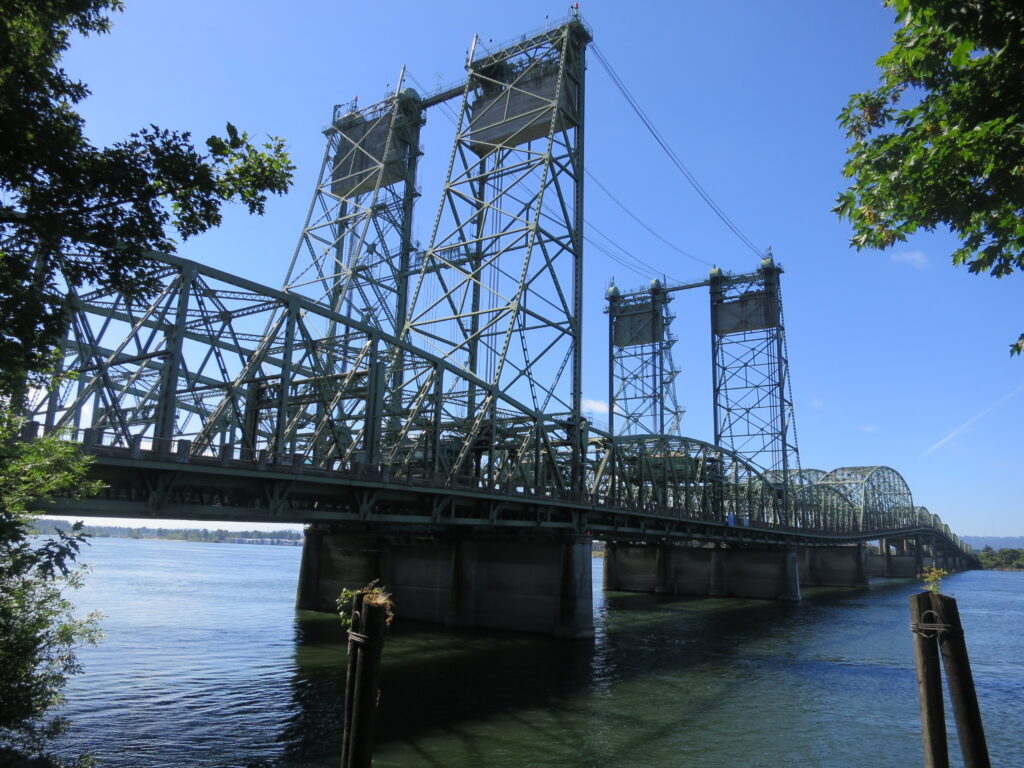
The Interstate Bridge at Vancouver is jammed with traffic every rush hour, and engineers warn it may not survive the next earthquake. Oldest portions of the span date from 1917.
Dear Friends and Neighbors,
The last time we debated a new freeway bridge at Vancouver, thirteen years ago, the entire project was supposed to cost $3.5 billion. Today that is the cost of light rail alone.
And if you think the estimates are scary, just wait until we start spending money. Right now they are telling us the entire Interstate Bridge Replacement project will cost $14.4 billion, give or take. This is the biggest project the states of Washington and Oregon have ever contemplated, and no one knows what the final price tag will be by the time they finish moving dirt. But something tells me this is the start of a financial nightmare.
That’s why I joined with Senate Republican Leader John Braun this week in calling for light rail to be put on hold as we get ready to replace the aging Interstate Bridge. We just don’t have the money for it. We have lined up less than half the amount we will need for the project. That’s about enough to build a bridge all by itself, with none of the extras. If we’re going to get anything done, that’s where we need to start.
In the op-ed you see below, we lay out the case for delaying light rail. Not only would it be absurdly expensive to bring Portland light rail across the Columbia into downtown Vancouver, the people of Clark County still need to vote on whether they wish to tax themselves for transit operations. That’s something decision-makers keep forgetting. Unfortunately, they remain stuck on light rail – the same issue that killed this project the last time.
Big issue for all of us in Southwest Washington
The new Interstate Bridge isn’t just a problem for our neighbors upriver. I represent the Senate Republican Caucus on the Joint Oregon-Washington Legislative Action Committee, the legislative panel that is overseeing planning for the new bridge. If we are not disciplined in our spending, the IBR could starve every other bridge and highway project in Washington and Oregon.
This project poses an enormous threat for all of us who live and work in Washington’s southwestern corner. We have two other major bridges across the Columbia that also are in major need of repair. At the mouth of the river, the Astoria-Megler Bridge has been in the news lately because of the urgent need to repair corrosion, expansion joints and a deteriorating bridge deck. The Lewis and Clark Bridge at Longview is in somewhat better shape due to recent repairs to expansion joints and the bridge deck, but at age 96 we need to start thinking about the massive reconstruction or replacement costs in its future.
Both of these bridges are vulnerable to the sort of strikes that brought down the Francis Scott Key Bridge in Baltimore last year. We need greater protection at the bridge piers – that’s going to cost money as well. And it’s not just bridges. We have the Gateway Project at Aberdeen, to eliminate grade crossings in the shopping district at the city’s eastern entrance. There are important road projects in every community of the state – and all of them are at risk if we allow this single bridge project at Vancouver to blot out the sun.
Older estimates probably wrong
One of the arguments we frequently hear about the fast-rising cost of Interstate Bridge replacement is that we should have done it years ago when it would have been cheap. This is a criticism of the Senate Republican Caucus, which killed the earlier Columbia River Crossing plan in 2013 when it declined to approve a billion-dollar state appropriation for the project.
I wasn’t in the Senate in 2013 and I didn’t participate in that decision, but I think it has been borne out by subsequent events. In 2013, the bridge project was supposed to cost $3.5 billion. Inflation can’t explain a 311 percent increase in the project cost. These shocking new estimates for the Interstate Bridge project, released in March, likely are a more realistic take on the numbers. In other words, it’s a lucky thing we didn’t say yes in 2013, because we would have had a terrible surprise when the real bill came in. And we have to wonder. Are these new numbers any more trustworthy than the old ones?
We need a new bridge at Vancouver. But a new-bridge-at-any-cost will be costlier than any of us can imagine.
Delaying light rail offers best hope for new Interstate 5 bridge

The following op-ed appeared in The Center Square, Clark County Today, The Reflector (Battle Ground, WA) and The Chronicle (Centralia, WA).
By Sens. John Braun and Jeff Wilson
Boston has its “Big Dig,” New York has its Second Avenue Subway and the states of Washington and Oregon are getting set to play in the same league.
Replacing the aging Interstate Bridge between Portland and Vancouver will be the biggest construction project our two states have ever undertaken. We’ve been working on this megaproject for 22 years, and we are closer to breaking ground than ever before.
Yet this latest effort is threatened by the same issue that killed the last big push 13 years ago. Decision-makers continue to see the new bridge as a means to get Portland light rail across the Columbia to Vancouver. They still haven’t figured out how we’ll pay for it.
Our message is simple. We need a safe bridge, and we need a bridge we can afford. We need a bridge that adds vehicle capacity and reduces traffic congestion. The oldest parts of the existing bridge date from 1917, it’s jammed with traffic morning and evening, and it’s at risk to fail in the next big earthquake. But we also need to get our priorities straight.
This is a bridge project, not a light rail project. And the only way this works is if we put light rail on hold until it makes sense for everyone — most importantly, the people of Clark County who would be taxed for light rail operations, and who have voted against it three straight times.
What we are suggesting should be obvious to everyone who has been following the story. What surprises us is that more people aren’t saying it. Everything became clear a few weeks ago when Interstate Bridge Replacement (IBR) managers finally released an updated cost estimate they had been delaying for months. Projected costs have doubled since 2022 to $14.4 billion, counting everything — new bridge, light rail and 5 miles of freeway improvements.
We don’t have that kind of money. So IBR managers and the governors of Washington and Oregon are proposing that we build the project in phases. We’ve lined up $5.7 billion from state and federal sources. The bridge alone will cost us $5.68 billion. Still pricey, but within the range of what we can achieve.
But the people driving this project don’t want to stop with that. They want light rail, too.
“That train has already left the station,” declared Washington Gov. Bob Ferguson, blithely ignoring the fact that light rail construction will add $3.5 billion we don’t have, and that the voters of Clark County still have not agreed to tax themselves for their share of operations, about $4 million a year.
The questions will take years to resolve. Will we qualify for a billion-dollar federal transit grant? What about the rest of the money? What about the public vote? Will the people of Clark County be insulated from the financial liabilities of the Portland Metro? And will the trains go all the way into Vancouver or will they stop on a viaduct 90 feet above the waterfront with no connection to local transit?
Committing to a multi-billion-dollar expenditure for light rail when questions like these go unanswered risks starving every other highway and bridge project in our two states, or pushing our bond capacity to the limit, or forcing taxpayer bailouts the entire populace will have to bear.
The problem is that this was conceived from the start primarily as a light rail project, with the bridge as a secondary element — what you might call the “rail that wags the dog.” It started in 2004 when Portlanders looked for a way to cross the river and tap the Washington tax base for light rail.
They realized they would have a tough job selling Clark County, where residents of outlying communities have little interest in supporting a light rail system they are unlikely to use. But what if they sweetened the deal with a multi-billion-dollar freeway bridge?
That got our attention. The bridge part made sense. Unfortunately, advocates of what was then called the Columbia River Crossing were unable to find a way to make light rail financially feasible. Senate Republicans tried negotiating, but the governor’s office told us to take it or leave it. We said no, the deal collapsed, and here we are 13 years later with a new proposal that looks like the old one. Just think. If not for light rail, we could have had a new bridge by now.
How can we break this logjam?
- Let’s focus on things we know we can accomplish, like building a bridge. Light rail is a separate question. We can make the bridge “light rail ready,” but who says the trains need to roll from Day One?
- Before we build light rail, the people of Clark County need to vote. Somehow decision-makers keep forgetting this. The people who will be taxed for light rail need to say yes, and their rights must be respected.
- Let’s keep our promises. If we’re going to sell this project as a way to reduce congestion, let’s do more than just talk. The current plan adds no capacity. We’ll still have three traffic lanes each way. The bridge will be wide enough for an additional lane in each direction. Let’s build it that way from the start.
The engineering involved in this project is easy compared to the political challenges. Until the people of Clark County say yes to light rail, let’s not force it on them.
A project this big, this complex and this costly should never be railroaded.
Sen. John Braun, R-Centralia, is leader of the Washington Senate Republican Caucus. Sen. Jeff Wilson, R-Longview, represents the Senate Republican Caucus on the Joint Oregon-Washington Legislative Action Committee, which oversees bridge planning.
Thanks for reading!

Sen. Jeff Wilson
19th Legislative District
Contact me!
 Telephone: (360) 786-7636
Email: Jeff.Wilson@leg.wa.gov
Mailing address: P.O. Box 40419 /Olympia, WA 98504
Leave a message on the Legislative Hotline: 1-800-562-6000
Take our survey: Let us know what you think at http://www.JWilsonSurvey.com
To unsubscribe from these regular updates from Olympia, go to the Subscriber Preferences Page below.